


PairingA conversation.
A conversation.
A working change.
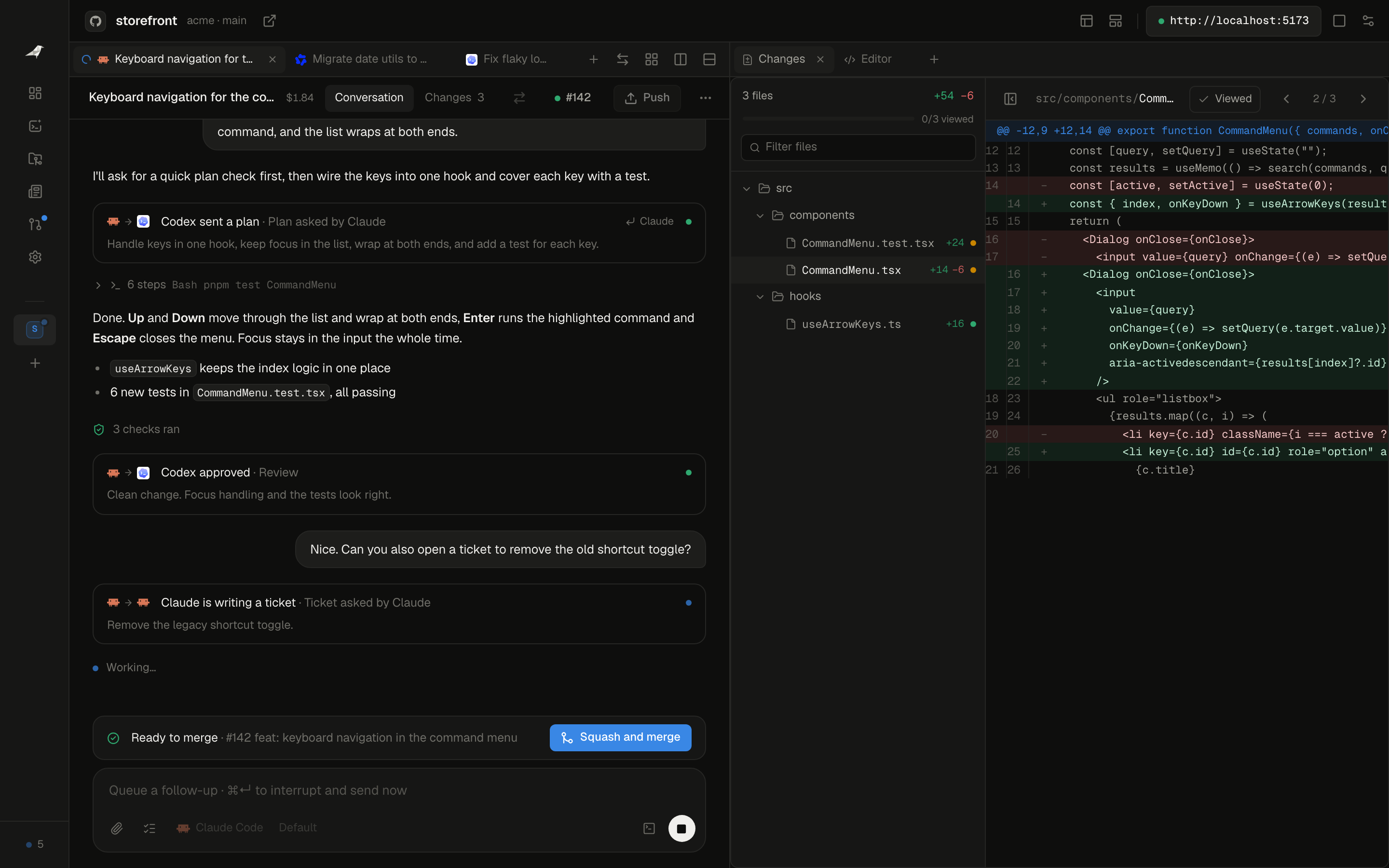
Describe the change and steer it with follow-ups. The conversation and the diff stay side by side.

Bring the agents you already work with
 Claude Code
 Codex
 Gemini CLI
 GitHub Copilot CLI
 Cursor CLI
 OpenCode
 Amp
 Antigravity
 Grok Build
 Qwen Code
 DeepSeek
 Kimi Code
 Mistral Vibe
 Devin
 Kiro
 Cline
 Kilo Code
 Goose
 OpenHands
 Aider
 Pi
 Muse Code
 MiniMax Code
 MiMo Code
 Hermes Agent
 Mastra Code
 Command Code
 Auggie
 Droid
 Crush
 Continue
 Open Interpreter
 Docker Agent
 Stakpak
 Tau
 Autohand
 Kimchi
 Prime Agent
 OMP
 fx
 Unreal Agent
 Codewhale
 memcode
Or run local and hosted models with  Ollama
 vLLM
 OpenRouter
 OpenAI-compatible
How it works
Pair on a change, run many at once, and review each one with evidence.
Describe the change and steer it with follow-ups. The conversation and the diff stay side by side.
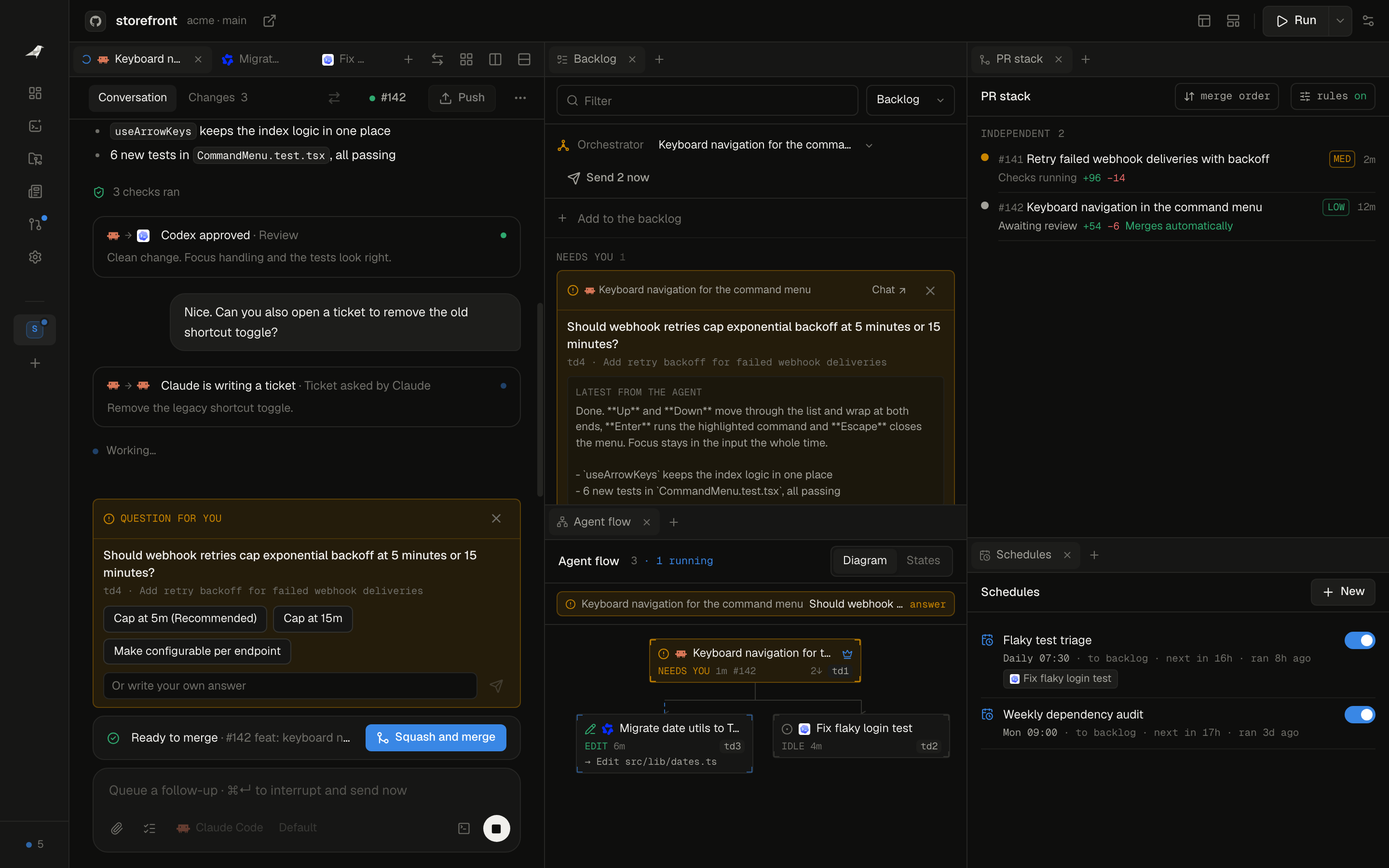
Run several tasks at once. Each gets its own agent, branch and git worktree, so nothing collides.
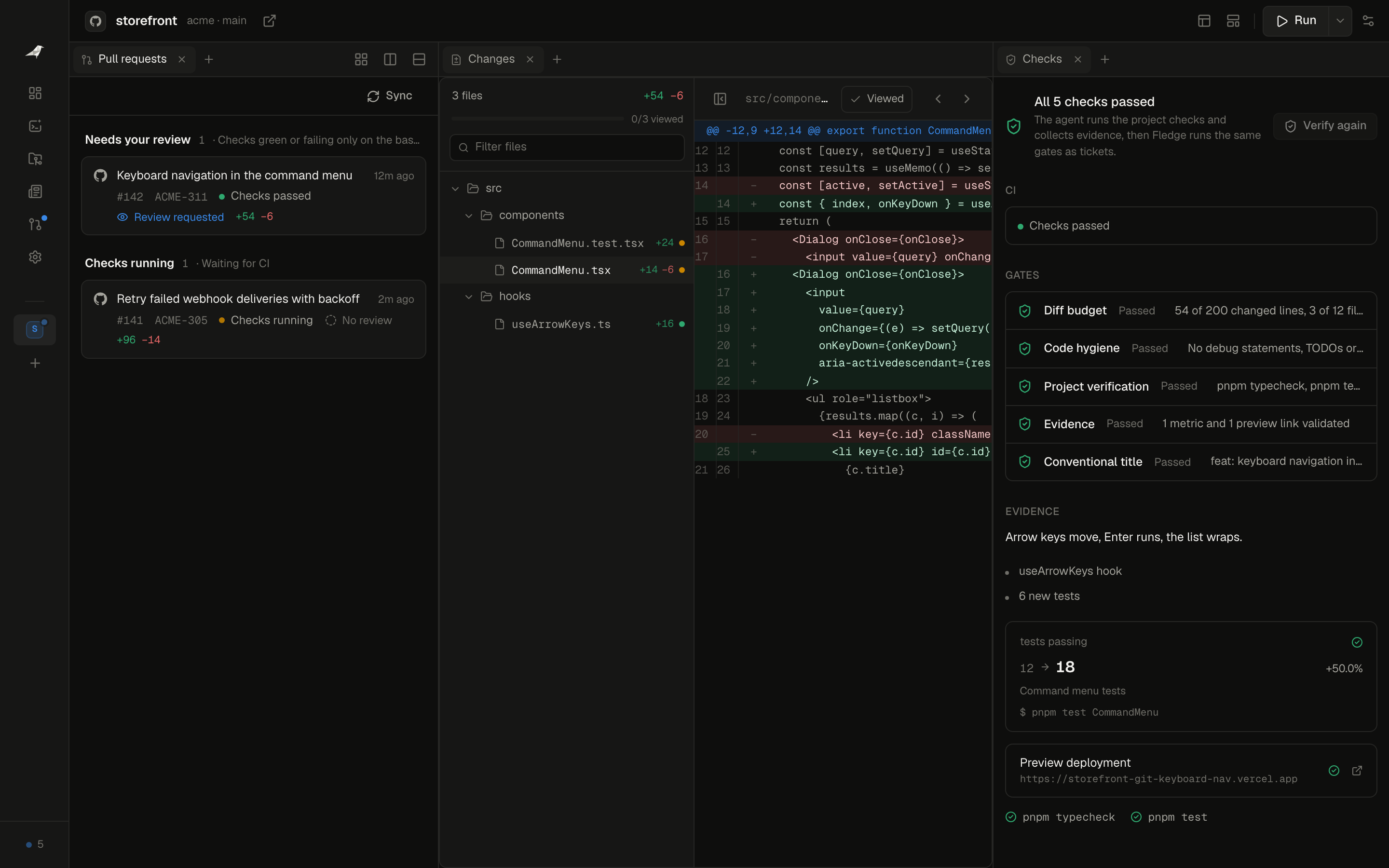
Quality gates check every change, and failed CI goes back to the agent that wrote it. You review a small diff with the evidence beside it.
Collaboration
Bring in another agent to plan, review or take a task of its own. The whole conversation stays in one place.
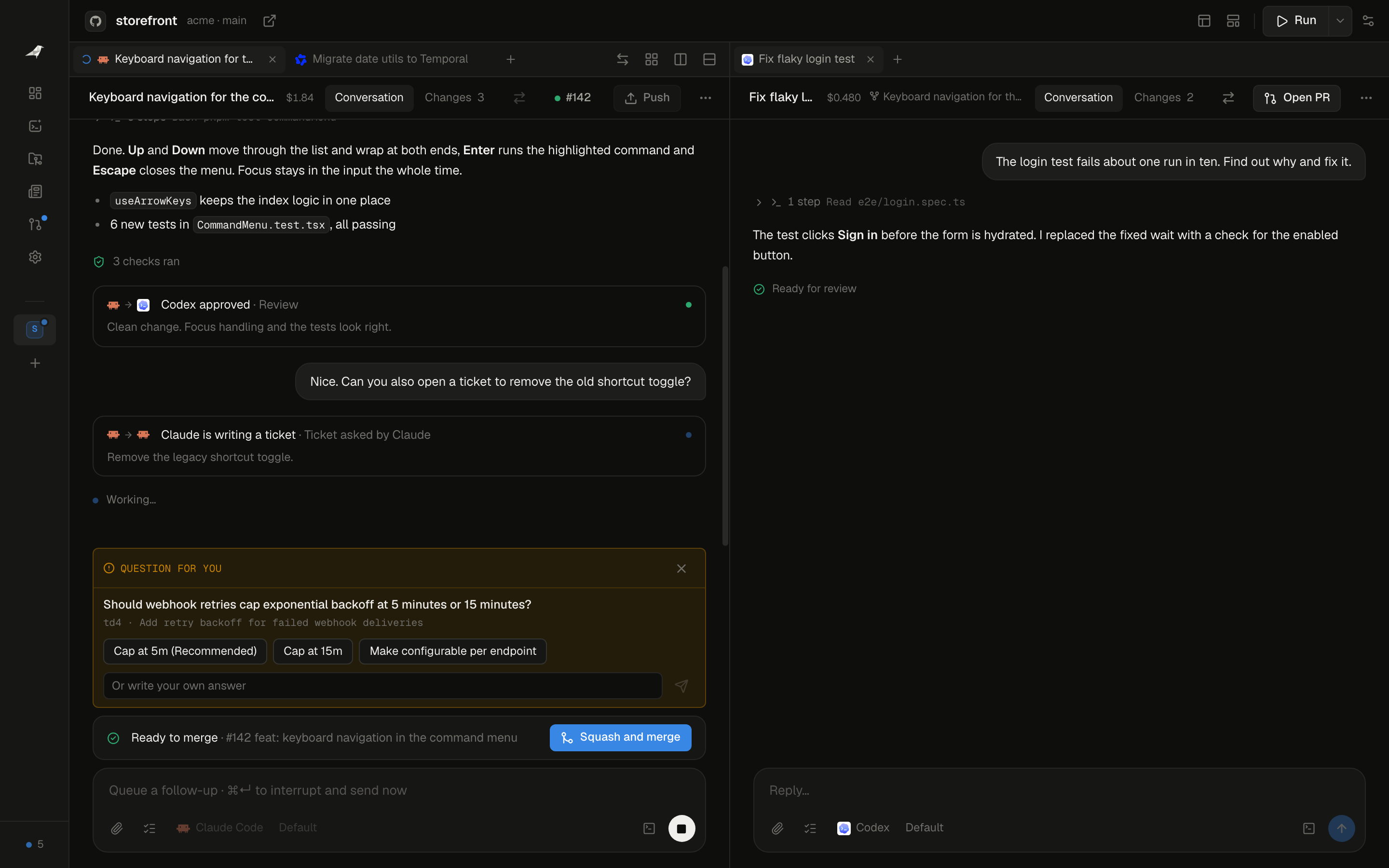
Fig. 4 Claude Code gets a plan and a review from Codex while a test fix runs on its own branch.
Hand a side task to another agent. It runs on its own branch, and you merge what you keep.
A planner and a reviewer are one click away, inside the session.
Pass the session to another agent with a summary of the work so far.
Office documents
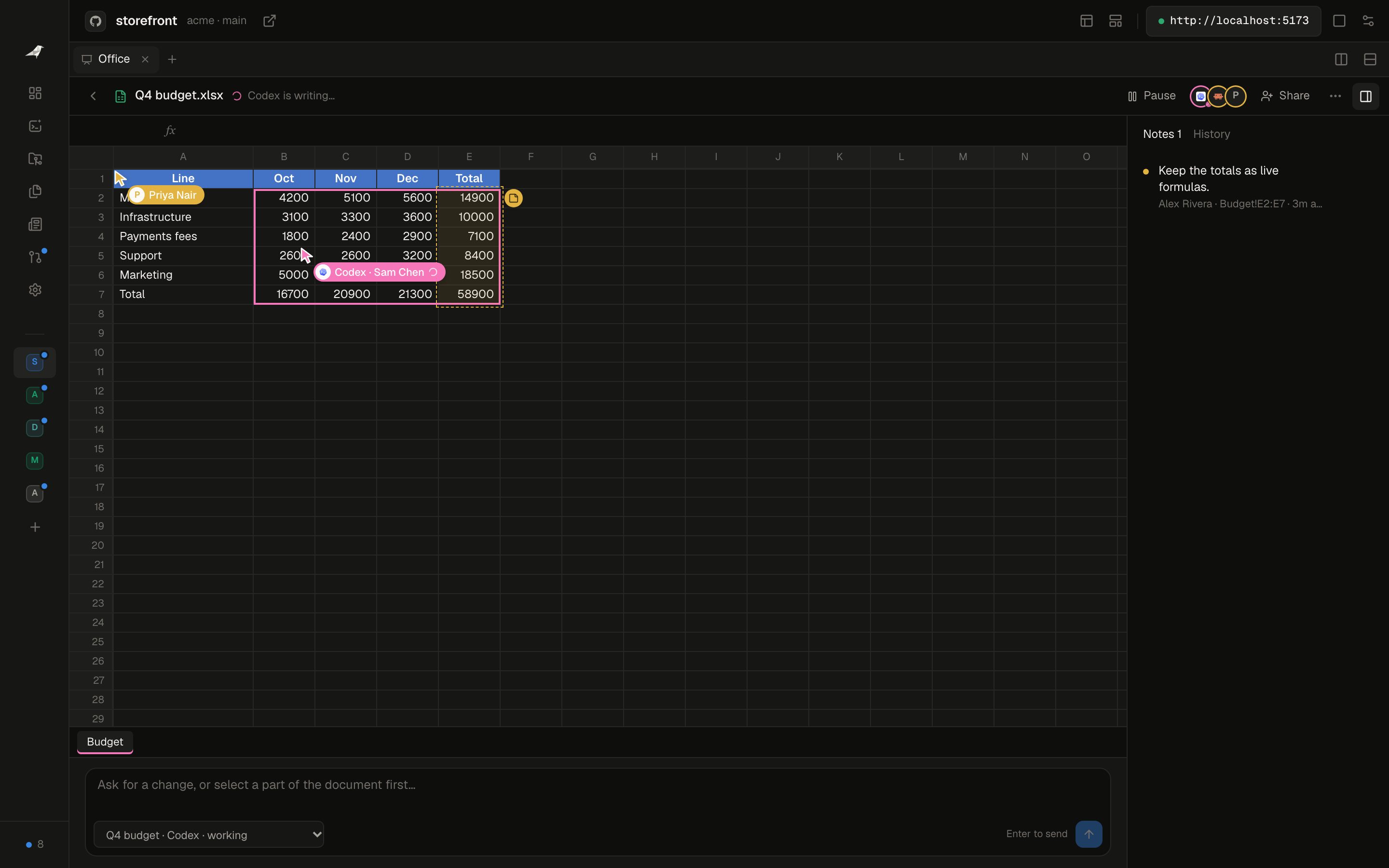
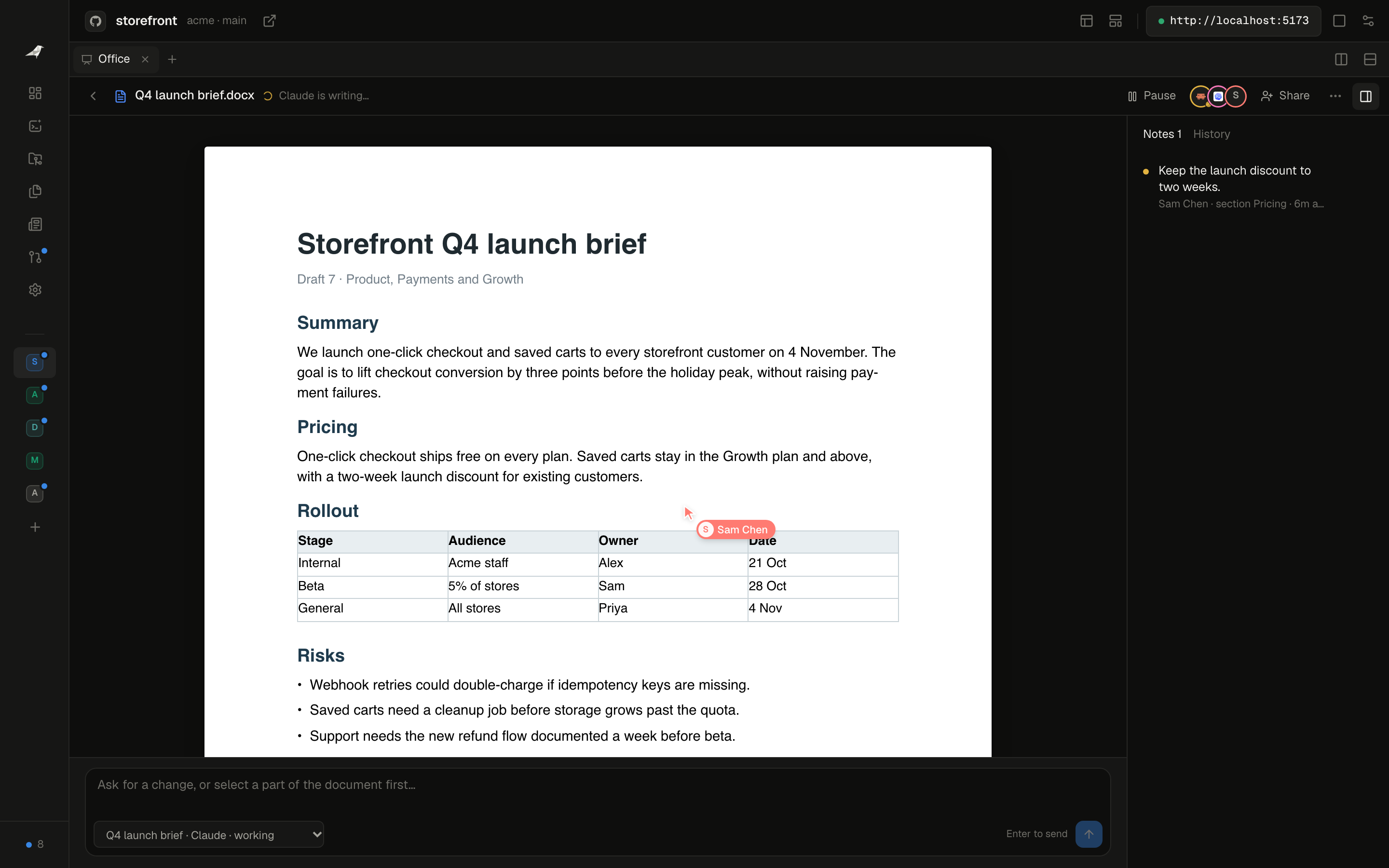
Work on a deck, workbook or document with agents and teammates at once. Changes appear as they land, and you can pause, redirect or revert any of them.
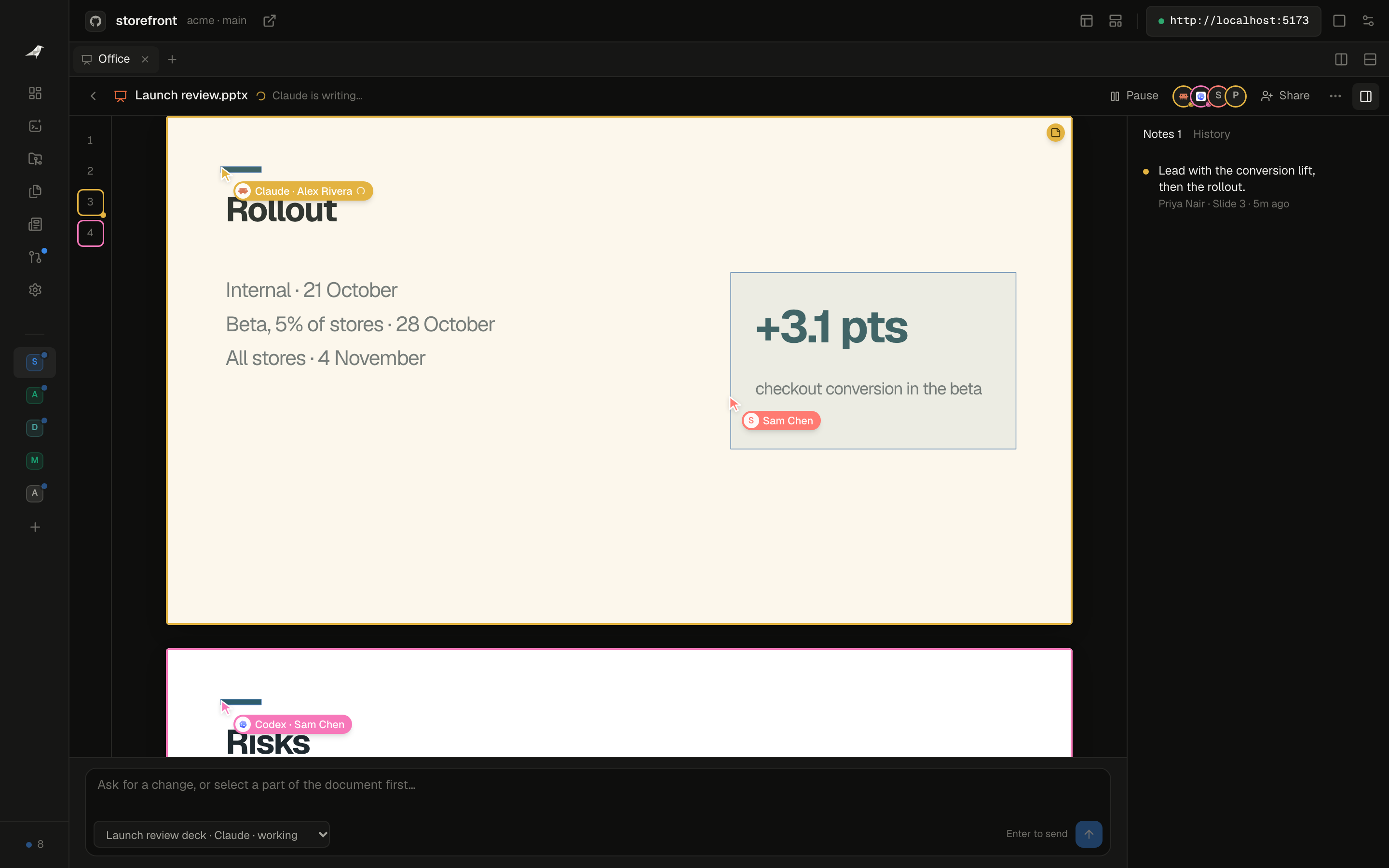
Fig. 5 Claude rewrites the rollout slide while Codex takes the risks, beside a teammate's note.
Good to know
Yes. Bring Claude Code, Codex, OpenCode, Pi, Qwen Code, Muse Code, or DeepSeek. The built-in harness also works with local and hosted model providers. Your chosen agent or provider handles usage and billing.
Each task runs in its own git worktree and branch. You can keep several agents working independently, then review their changes before merging.
Fledge returns the failure and logs to the same agent session, so it can fix the issue on the existing pull request. You can follow progress and step in at any time.
The workspace database lives on your machine and tokens are stored in the system keychain. Code and context may be sent to the agent or model provider you choose, and pull requests go to your connected forge.
Your ideas. Your agents. A little more space to think.
 Download for macOS